
Magnesium Surface Treatment Options: Passivation to Topcoat
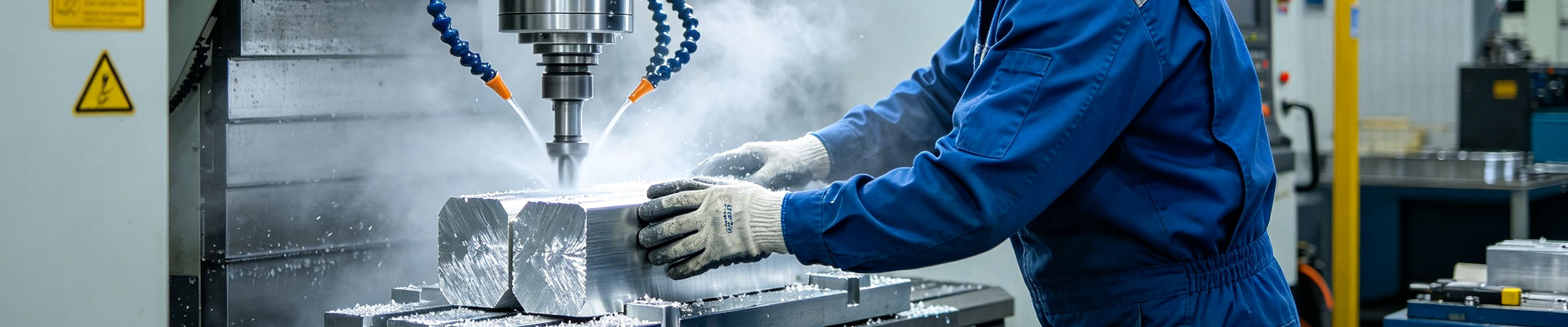
Magnesium has the lowest electrode potential of common structural metals. A practical comparison of conversion coatings, PEO, powder coating and the joint design that decides whether any of them survive.
Every buyer eventually asks the same question about magnesium: will it corrode? The honest answer is that untreated magnesium will, and that the treatment system chosen matters less than people expect compared with the joint design it has to survive. This note compares the common finishing routes — chemical conversion, anodic and plasma electrolytic oxidation, powder coating and painting — and then explains why the fastest way to fail is to specify a coating without specifying the assembly around it.
Why magnesium needs protection at all
Magnesium has the lowest standard electrode potential among common structural metals, around minus 2.37 volts. In a dry, clean environment a thick casting is stable. Add moisture and an electrolyte, and the moment magnesium contacts a more noble metal, a galvanic cell forms with magnesium as the sacrificial anode. The potential gap to passive stainless steel is roughly 1.7 volts, among the largest in the galvanic series, and the damage geometry is unforgiving: galvanic current scales with cathode area and concentrates on the anode. A small magnesium bracket bolted to a large steel frame can corrode many times faster than a material-compatibility chart suggests, and the attack appears within a few millimetres of the fastener rather than in the middle of the panel.
There is a second, internal mechanism. Iron, nickel and copper above threshold levels act as micro-cathodes inside the alloy itself, which is why high-purity grades such as AZ91D-HP and AM60-HP behave far better in salt fog than standard purity material of the same nominal composition. Machining removes the outer skin where foundry contamination tends to sit, which is one reason a machined surface can outperform an as-cast one in a corrosion test. We set out the evidence in our note on machined surfaces and joint isolation.
The finishing routes compared
Chemical conversion coating. A conversion layer is the base under almost every other finish. Chromate conversions performed well historically but face increasing regulatory pressure; chrome-free alternatives based on rare-earth or trivalent chemistry are now common. A published figure for AMS-M-3171 Type III, the Dow 7 thin conversion, is 96 hours in ASTM B117 at 1 to 3 µm. That number is a ranking screen, not a service life. The layer's job is to provide adhesion and a degree of barrier protection, not to survive twenty years on its own.
Anodic and plasma electrolytic oxidation. PEO, also called micro-arc oxidation, grows a ceramic-like layer from the metal itself. Published figures put Tagnite-type anodic coatings above 500 hours in B117 and PEO ceramic layers above 1,000 hours, while another source gives 500 to 2,000 hours for the base layer and 2,000 to 5,000 with sealing and a topcoat. These are different coupons and stacks, so they should not be compared as competing measurements of one property. PEO is harder and more wear-resistant than a thin conversion, but it is also more brittle and needs a sealer because the layer is porous.
Powder coating and painting. These provide the thick barrier and the colour, and they are where a complete automotive exterior stack reaches around 110 to 155 µm total thickness with targets of 2,000 hours or more in both B117 and cyclic GM9540P. A powder coat applied over an unprepared as-cast surface will fail early: the micro-galvanic cells are already under the film, and the coating has no stable base to bond to. Sequence matters as much as material. The published cleaning sequence runs pre-degrease, ultrasonic degrease, water rinse, magnesium-specific acid pickling, deionised rinse, chrome-free conversion, deionised rinse, hot deionised rinse, drying — then coating.
Oil and temporary protectives. For parts in transit or short-term storage, VCI packaging and a light protective film may be all that is needed. That is a supply-chain decision, not a service-life claim, and it should not be confused with a finished part specification.
What the salt-spray hours do not tell you
ASTM B117 is a continuous 5% sodium chloride fog at 35 ± 2 °C with a pH of 6.5 to 7.2. It is a comparative screening method. It does not reproduce a vehicle, which alternates salt, humidity, drying, temperature and mechanical load. That is why OEMs ask for cyclic tests such as GM9540P or SAE J2334, and why a bare "1,000 hours salt spray" in a quotation is not a specification: it omits substrate preparation, layer stack, test method and acceptance criterion. Two of the commonly quoted figures come from companies selling the coating.
Ask instead what is being judged at the end of the test — first white corrosion, loss of adhesion, or visible pitting — because the same coating can pass one criterion and fail another. And insist that the test coupon represents the actual joint, with the same fastener, the same crevice and the same area ratio.
Joint design decides whether the coating survives
The most effective single measure against galvanic corrosion is to break the electrolyte path. Published guidance is unusually specific: a non-conductive sleeve through the bolt hole, an insulating washer under the fastener head, and a faying-surface sealant applied before assembly. All three. A single missing isolator restores the full circuit. Aerospace practice adds wet assembly — a thin paint layer on the bolt before insertion and paint over the head afterwards — and dielectric washers of G10/FR4 or polyimide. Where steel fasteners are unavoidable, zinc-nickel plating to ASTM B841 narrows the potential gap. Carbon-fibre mounts need a dielectric barrier film at the mating face.
Aluminium washers are common in automotive assemblies, but their effectiveness depends on composition. A study of conversion-treated and powder-coated AM60 plates tested for 40 days under GM9540P still showed severe galvanic corrosion where no aluminium washer was used. The coating alone did not save the joint. That is the result to keep in mind when a quotation says "powder coated, corrosion protection included".
What belongs in the drawing
Name which faces stay as-cast and which are machined before coating. Give the alloy purity grade and its impurity limits. Specify the conversion or PEO layer and the topcoat by standard rather than by trade name alone. Call out isolation parts by part number rather than "use insulating washers". Require sealant at every faying surface. And specify a coupled-assembly corrosion test — ASTM G71 for the galvanic couple, GM9540P or a comparable cyclic method for the environment — on the real joint. A flat coupon has no fastener, no crevice and no area ratio, so it cannot reproduce the failure mode that will actually appear.
What a buyer should ask a supplier
Ask what the surface preparation sequence is before coating, and whether it includes magnesium-specific pickling and a chrome-free conversion. Ask which faces are machined before finishing. Ask what the joint isolation looks like on the assembly drawing, not just the part drawing. Ask which test method and acceptance criterion were used, and on what coupon. Ask whether the quoted hours refer to a base layer alone or a full stack with sealer and topcoat. And ask who is responsible if the part passes a flat-coupon test and fails in the assembly.
We run die casting, precision machining and surface treatment in one plant in Ningbo, so the machining-to-coating sequence sits with the same people and can be argued out before the drawing is frozen. Send the assembly drawing, not just the part; process scope here. For the machining conditions that affect the surface, see our note on magnesium CNC machining; for the export packaging that protects the finish in transit, the sea-freight note.
One line
A coating is a system, not a product. The specification that matters is written around the joint, the preparation and the test — not around a single hour count.