
Conformal Cooling and Semi-Solid Magnesium: Two Topics That Must Be Judged Together
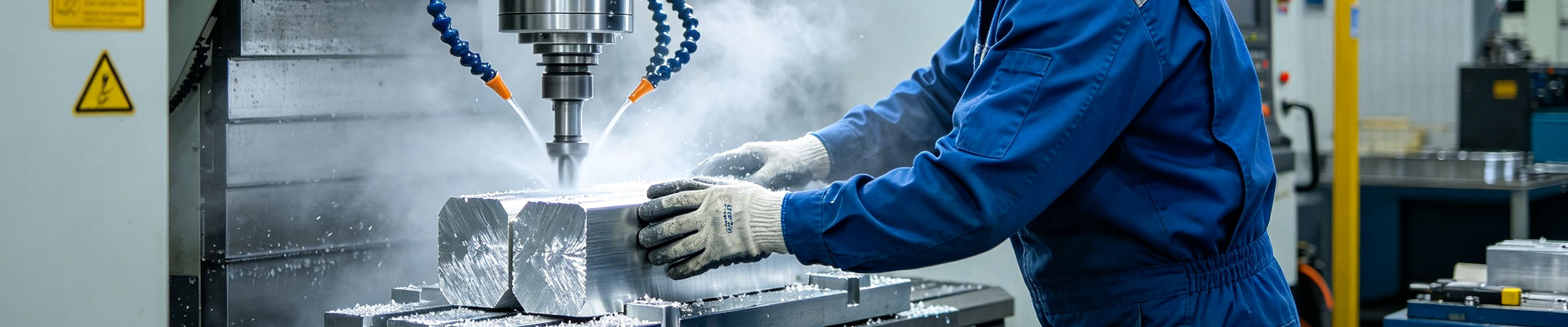
A November 27 China time mold seminar in Beilun put additive-manufactured conformal cooling and semi-solid magnesium in the same room. The signal is technical priority — not production readiness.
On November 27 China time — November 26 US Eastern time — a seminar on large precision die casting molds in Beilun focused on additively manufactured conformal cooling and semi-solid magnesium alloy technology. A report published on November 28 China time, November 27 US Eastern, also noted a precision high-speed forming seminar in Changzhou addressing structural parts for AI servers and embodied robots. The useful part of the coverage is its restraint: these are signals about technical priorities, not evidence that a process has reached production at scale.
What conformal cooling actually proposes
In die casting, temperature control determines the conditions under which metal enters the mould and solidifies. Conventional cooling channels are drilled or cast in relatively straight paths. Conformal cooling uses channels shaped to follow the geometry of the mould or the part, so temperature control can be directed at areas a simpler channel layout cannot reach. Additive manufacturing makes those internal geometries possible to produce.
The question for a large precision die is not whether a channel can be made. It is where heat needs to be removed, how the channel arrangement fits inside the mould, and whether the resulting temperature control supports consistent part quality. More targeted control could help with local thermal imbalance, but the effect on cycle time or part quality cannot be inferred from the seminar topic alone. Design, material, operating conditions and maintenance all matter. Our note on mould temperature and thermal balance covers the underlying problem.
Material and channel design are related, not interchangeable
The seminar also emphasised high-thermal-conductivity mould materials. Material selection and channel design both influence heat management, and neither automatically determines the result. A useful comparison considers the whole mould system: the areas where heat must move, and the conditions the material must withstand. A supplier who offers only a channel design, or only a better steel, has answered half the question.
This matters when a buyer is told that a new mould will "solve" a thermal problem. Ask what is being held constant and what is being changed. The die-life discussion makes the same point about tooling claims: a number without conditions is not a specification.
Why semi-solid magnesium was in the same room
In a semi-solid process, the alloy is formed while it contains both solid and liquid phases. That window makes control of material condition and forming conditions central to the result. Its presence alongside conformal cooling is logical: mould temperature and alloy behaviour meet at the forming stage. A producer considering a semi-solid magnesium part has to evaluate process and mould together — geometry, thermal conditions and required properties all affect suitability.
The seminar topic does not establish that semi-solid magnesium will replace other materials or methods. Weight is only one part of the decision; mechanical performance, dimensional accuracy and production consistency shape the choice. We have compared the routes by part number, and discussed the capacity side in our note on semi-solid capacity in South China.
What the application session adds — and does not add
The Changzhou seminar put AI servers and embodied robots on the list of potential applications for precision-formed structural parts. That shifts attention from a forming method to the requirements of the part: geometry, dimensional precision, material choice and how the part fits an assembly. Mentioning those applications identifies areas for investigation; it does not establish common specifications or demand across them.
The two seminars should also be kept separate. One addressed large die casting moulds and semi-solid magnesium; the other precision high-speed forming. They sit within a wider move toward lightweight, higher-end components, but the coverage does not establish that the same process, material or part was discussed at both. For a supplier, this distinction determines where a new requirement is likely to appear first — a mould question, a forming question or a part-design question.
How to turn a seminar topic into a production decision
For conformal cooling, a meaningful assessment looks at temperature behaviour in the actual mould and its effect on the specific part. For semi-solid magnesium, it asks how consistently the material can be formed to meet defined requirements. For precision forming, the comparison turns on the design and performance needs of the part. In each case the question is the same: what evidence exists at production volume, not at concept stage.
Ask for a temperature map, cavity-level dimensional data, the maintenance plan for the channels, and the process window held over a real run. A concept is cheap to present; consistency is what a programme pays for.
Where to start
We design and build tooling next to our die casting and machining lines in Ningbo, so thermal design and forming behaviour are assessed together. Send the part and the current thermal problem and we will tell you whether a channel change, a material change or a process change is the right first step.