
Semi-Solid Is Replacing Die Casting. Which Part Number?
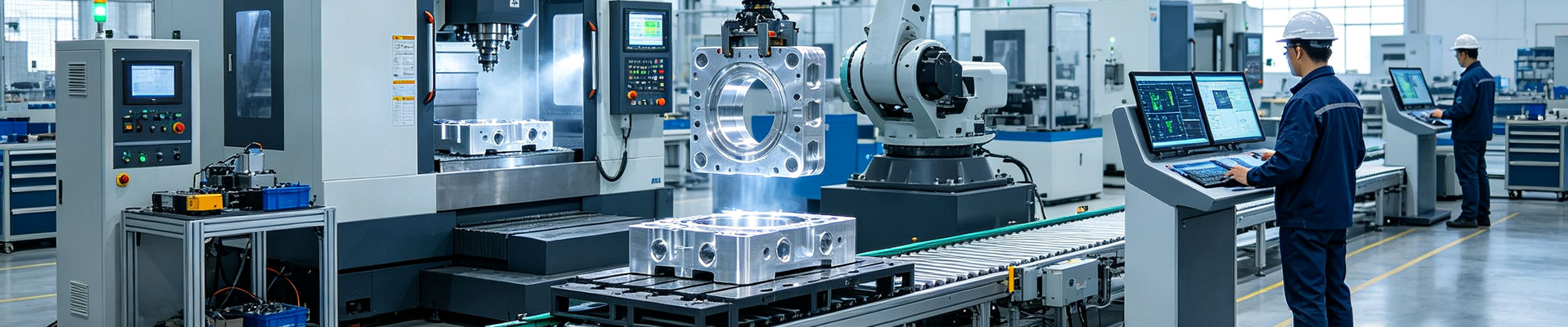
On 5 November one Chinese supplier said semi-solid is replacing HPDC; on 13 November another said the two routes simply have different boundaries. The November machine list explains why both can be true.
On 5 November 2026 an SMM note quoted the general manager of a Ningbo magnesium die caster saying semi-solid die casting is gradually replacing conventional high-pressure die casting. On 13 November a Chongqing supplier published a long first-person account saying almost the opposite: the two routes have different working boundaries, and the choice depends on the part's geometry, volume and cost target, not on which process sounds newer. Same week, same industry, both from people who run factories. We are not going to adjudicate. The more useful thing is to look at what was actually announced in between.
What the November list consists of
Almost all of it is machines, prototypes and floor space.
| Announcement | Machine / figure | What it actually is |
|---|---|---|
| Li Auto + Duoli, Changzhou (September, written up in November) | Bühler 9,200 t; about three months from kickoff to first prototype | One-piece magnesium rear underbody sample, not a series rate |
| ChenZhi Lightweight / Changan | 5,000 t with a semi-solid module; 1,487 × 1,263 mm, 2.5 mm wall, nine steel parts into one | Magnesium inner tailgate panel; 45% lighter than a steel assembly |
| Haitian cell tested by Waffer, Maanshan (late September) | 7,000 t, two injection units, theoretical shot weight above 38 kg | A successful machine test, with CCB beams and tailgates named as potential uses |
| Bole MTX2500D delivered to Leggera Technologies, Michigan (5 November) | Large thixomoulding machine; roughly 4,200 m² of added plant | Equipment delivery and installation |
| Tianhao New Materials, Huizhou (5 November) | Nine thixomoulding machines, 700 to 3,600 t | A purchase plan, commissioning in the first half of 2027 |
| Yizumi, reported at the Guangzhou semi-solid conference (31 October to 3 November) | 6,600 t semi-solid magnesium machine | In R&D validation for large structural parts |
These are clamping forces, theoretical shot weights, planned installations and first articles. None of them is a cycle time, a scrap rate or a die life. EUROGUSS 365, covering the same cluster of projects in November, added the qualifier most Chinese coverage leaves out: a successful prototype "provides no indication of scrap rates or cycle times in series production". That single sentence is worth more than the tonnage list.
Why "replacing" is the wrong verb
Thixomoulding does not melt the alloy. Magnesium chips are plasticised in a heated screw barrel at roughly 560–630 °C and injected in a semi-solid state, so there is no melting furnace, no ladling of molten magnesium and no SF₆ cover gas. Filling is laminar rather than turbulent, which reduces entrapped gas and shrinkage porosity. Those are real differences, and they explain why the process keeps winning safety-relevant structural work.
They also buy a narrower control problem. Solid fraction is highly temperature-sensitive: once the slurry leaves its window, fluidity, weld-line integrity and liquid/solid segregation degrade together. A CAE module for semi-solid magnesium injection launched on 5 November (SupreCAST, reported by China Development Network) lists the defects it is built to predict — gas porosity, shrinkage, cold shuts, macro- and micro-segregation, inclusions, misruns, flash — and names the unresolved engineering items: temperature-to-solid-fraction closed-loop control across continuous production, die life versus cyclic thermal management, and a shared material-process-geometry parameter set. That is a description of a process still being stabilised, not one quietly displacing an incumbent. It is also why the 2026 Wuling Industry / Chongqing University e-drive housing had to solve creep at temperature, corrosion, porosity and leak-tightness as one problem, alloy and die design together.
Equipment suppliers publish comparison tables claiming 30–50% lower energy use, die life extended two to four times, material utilisation above 90% and total cost down 20–30%. A separate public review puts the total cost of semi-solid equipment about 10% above conventional die casting, with yield still improving. Both may be defensible inside their own boundaries. We would not put either set of percentages into a quotation, because neither states the part, the volume or the scrap baseline they were measured against.
There is a plainer reason the two November quotes can both be true. The Chongqing account describes a plant with 52 die-casting units from 400 to 7,000 t, 20,000 t of annual magnesium/aluminium casting capacity and a 30,000 t magnesium scrap recycling line — and it still says the routes have separate boundaries. A factory buying semi-solid machines is not a factory switching off its HPDC cells. Equipment orders get written up as a trend; part numbers move one at a time.
The number that would settle it
One exception in the coverage is worth isolating: the semi-solid magnesium CCB developed by Chongqing Boao and Seres is reported at a stable 1,000 sets a day on AITO models. That is a rate. ChenZhi marked its one-millionth integrated die-cast product off the line on 6 November, but the announcement does not say how many of those were magnesium, so we would not count them as such. In September ChenZhi discussed series-production requirements with Seres; EUROGUSS notes that no order was announced. And in October Waffer pointed out that certain aluminium alloys in China were around 30% more expensive per tonne than a magnesium alloy — immediately adding, in the same industry coverage, that what matters is total component cost including processing, rework and scrap. The material price is rarely the deciding line.
If you are qualifying a part, the question is not "do you have semi-solid". It is: which line will run this part number, at what cycle time, at what qualified scrap rate, and who owns the die when it is used up. We wrote separately about what a trial yield does and does not prove; this is the same discipline applied one step earlier, before a route is chosen.
We keep tooling, die casting, precision machining and surface treatment in one plant in Ningbo, so route selection and die design are usually argued out before the drawing is frozen. That does not make us neutral — we run conventional HPDC cells as well — and we would rather say so. Here is the process scope, or send the part and the annual volume. For the number most likely to be missing from a tooling quotation, see our note on die life and amortisation.
For the next press release
If a headline says "replacing", look for a part number and a cycle time. If all it gives you is a clamping force, it is a machine order — a perfectly good fact, just a different one.