
Mould Temperature Is a Process, Not a Number on the Controller
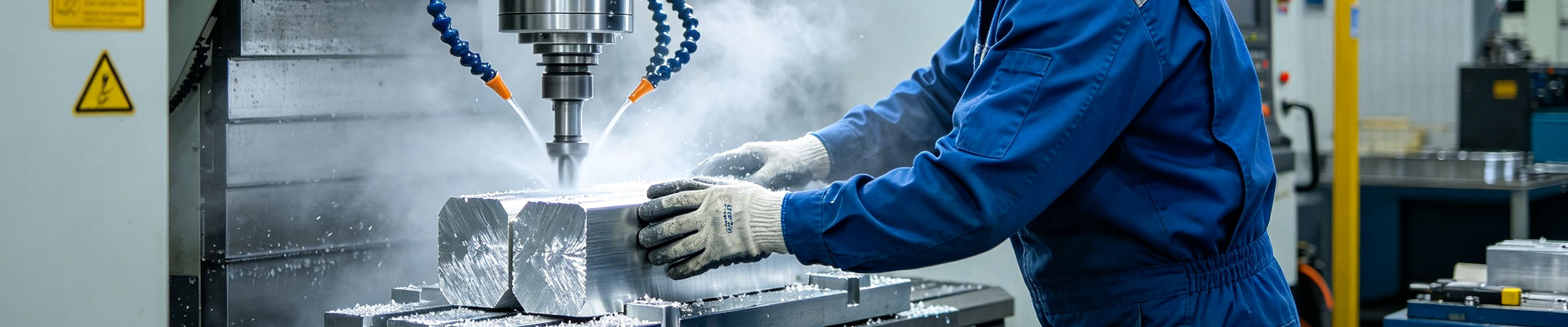
When a magnesium die casting goes wrong, the first knobs touched are speed and pressure. Mould temperature and thermal balance often decided the outcome before either was changed.
In die casting debugging, the first adjustments are usually injection speed, pressure and gate geometry. Mould temperature tends to be treated as a setting to be entered once on the machine and left alone. In practice it is a process variable with as much influence as any of the first three, and on magnesium it has a narrower useful window because the alloy solidifies quickly.
Two plants can run the same alloy, the same die and the same shot parameters and produce different parts simply because one is at 180 °C and the other at 260 °C. Which one is right depends on the part. What matters is that neither number is meaningful without a thermal map of the die.
What mould temperature actually controls
It controls the temperature of the metal at the flow front, and therefore whether a thin section fills before the skin forms. It controls the solidification sequence: where the last metal to freeze sits, and whether that location can be fed. It influences gas porosity, cold shuts, flow marks, sticking and the condition of the die surface. It also changes the dimension the part will settle at after ejection and cooling.
Magnesium's low heat content compared with aluminium means the die has less time to do its work. A cold die freezes the front early and leaves cold shuts; an overheated die prolongs solidification, raises cycle time and can increase shrinkage and sticking. Typical die-surface windows for magnesium die casting are often quoted somewhere in the 180–280 °C range, but the number is not transferable between alloys, wall thicknesses and processes. A semi-solid process does not use the same window as high-pressure die casting, and a 2 mm structural skin does not behave like a 6 mm housing wall. The process sheet for the specific part is the only valid reference.
Hot spots, cold zones and where they come from
Thermal balance is not the same as making the whole die hotter. A die usually has both a hot zone near the gate and thick sections, and cold zones at the end of flow or beside heavily cooled inserts. Adding heat globally to fix a cold shut may make the hot spot worse, lengthening solidification exactly where the casting cannot be fed. The usual causes are uneven cooling-channel placement, a thick-to-thin transition that was not given a gradual run-out, insert materials with different thermal conductivity, and release spray applied more heavily in one area.
On a large part, the gate layout decides much of this before the first shot. Our note on gating ratios and ingate velocity covers the hydraulic side of the same problem. A gate that fills too fast for the die temperature will produce a different defect from one that fills too slowly; neither is fixed by another 10 °C on the oil unit.
Measuring it honestly
An infrared gun reads the die surface, and it reads it differently depending on emissivity, oxidation and spray residue. A thermocouple embedded near the cavity reads a different value again. Both are useful, but they are not interchangeable, and a number without a stated location is almost useless.
Record three things: where the measurement was taken, how long the die had been running, and what happened to the surface between shots. A die at first article and the same die after 800 cycles are different thermal systems. Release spray cools the surface locally and its effect depends on the spray pattern and the interval between shots. If a supplier can show a temperature trace across a run rather than a single reading, that is evidence of control; a single reading is evidence of a reading.
The cycle-time trap
Lowering die temperature can shorten the nominal cycle, so it is tempting when a programme is under cost pressure. The saving often reappears downstream as cold shuts at thin ribs, more sticking, more die polishing, and extra machining to reach a sound surface. Total cycle is casting plus trimming plus machining plus rework, and only the first of these shows up in the press report.
This is why we look at the whole chain when a cycle-time number is quoted. Our piece on trimming, deburring and machining takt explains how a few millimetres at the gate changes the downstream rate, and the same logic applies to die temperature. A stable die that runs two seconds slower can deliver a better line rate than a marginal die running two seconds faster.
Five questions for a supplier audit
First, what is the temperature-unit capacity and the oil-circuit layout, and does the die have independent circuits for the hot and cold zones? Second, where are the thermocouples, and can the supplier show a recorded trace from a production run? Third, what is the release-spray amount and cadence, and how is it checked? Fourth, what is the dimensional difference between first article and steady state on a critical feature? Fifth, when temperature drifts out of window, what is the documented reaction — stop, adjust, or sort?
The fifth question is the most revealing. Every supplier has a target temperature. Fewer have a written reaction to losing it. Dimensionally, drift also shows up later than expected, which is why we separate measurement condition from part variation when investigating a "part grew by 0.1 mm" complaint. Die life is tied to the same habits: what a die-life number can tell you depends on how the die was treated between shots.
Keeping the variables in one place
Thermal balance is one of those subjects where passing work between companies loses information. The die maker knows the channels, the caster knows the shots, the machine shop knows where the porosity actually surfaced, and the coater knows what the surface looked like before treatment. In our Ningbo plant those four steps sit under one roof, so a temperature change can be followed through to the machined and coated part rather than stopping at the press.
If you are qualifying a magnesium die casting supplier, bring the die thermal map to the conversation. Send us the part and the current problem and we will tell you whether temperature is the variable worth changing first.