
Machining the Skin Off a Magnesium Casting Can Make It Corrode Less
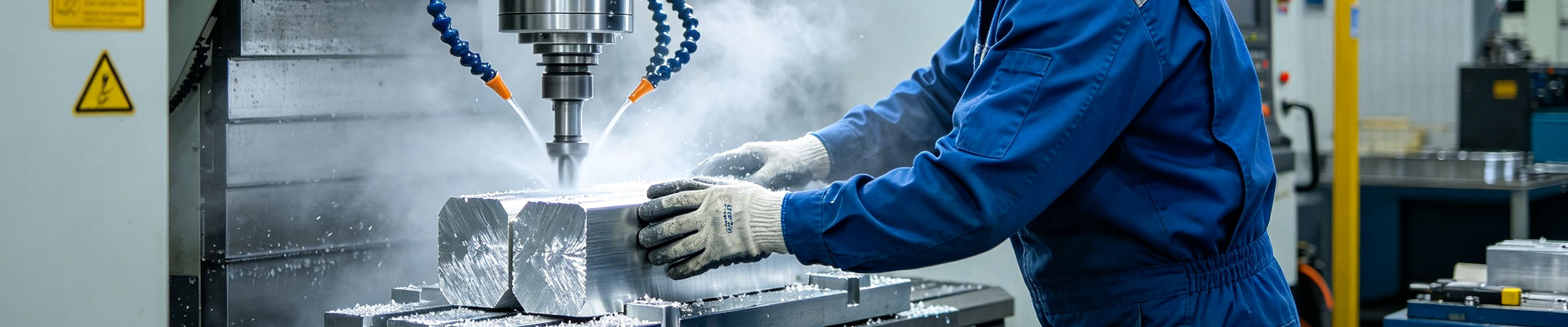
As-cast AM60B corroded up to 100% faster than machined surfaces in salt spray. What that means for surface prep, fastener isolation and the numbers in a corrosion test report.
A result buried in a study on joining areas in magnesium die-cast and sheet products is easy to read past: HPDC AM60B plates from two suppliers corroded faster on their as-cast surfaces than on machined ones, in some comparisons up to 100% faster in ASTM B117 salt spray. For as-rolled AZ31 sheet the difference was at least an order of magnitude. SEM with EDS found iron-rich particles on those as-cast and as-rolled surfaces, likely foreign material left by the casting or rolling process. A separate corrosion reference reaches the same conclusion from the other direction: blast residues — iron from steel shot, silica from sand — cause pitting on unmachined surfaces, while sanded or acid-etched samples perform vastly better in salt water and salt spray. Two independent sources, one awkward conclusion. On magnesium, the skin you leave on can be the problem.
That is inconvenient because most supplier questionnaires treat surface finish as a cosmetic or dimensional line item. It is neither. It is where the corrosion test starts.
Two corrosion mechanisms, one surface
The first is micro-galvanic and internal. Iron, nickel and copper above threshold act as micro-cathodes inside the alloy itself, which is why high-purity grades such as AZ91D-HP and AM60-HP, with controlled impurity limits, behave substantially better in salt fog and cyclic tests than standard-purity material of the same nominal alloy. Removing the outer layer by machining removes the contaminated skin along with it. This is also why a coating applied over an unprepared as-cast surface can fail early: the cell is already there, under the film.
The second is the one people actually mean when they say "magnesium corrodes". At an electrochemical potential of about -2.37 V, magnesium is sacrificial to every other engineering metal. Coupled to passive stainless steel the gap is roughly 1.7 V, among the largest in the galvanic series. The damage is governed by geometry as much as by the material pair: galvanic current scales with cathode area and concentrates on the anode, so a small magnesium bracket bolted to a large steel frame can corrode 10 to 100 times faster than a simple material-compatibility table predicts. SAE J2611 exists because of exactly this. In practice the attack shows up within about 5 mm of a fastener or a dissimilar-metal interface — which is to say, at the mounting point, not in the middle of the panel.
The joint is where the drawing earns its keep
Coatings reduce galvanic corrosion; they do not eliminate it. The most effective single measure is to break the electrolyte path at the joint. Published guidance is unusually specific here: a non-conductive sleeve through the bolt hole, a non-conductive washer under the fastener head, and a faying-surface sealant applied before assembly. All three. A single missing isolator restores the full galvanic circuit. Aerospace practice adds "wet assembly" — a thin paint layer on the bolt before insertion and paint over the head afterwards — and dielectric washers of G10/FR4 or polyimide; where steel fasteners are unavoidable, zinc-nickel plating per ASTM B841 narrows the potential gap. Carbon-fibre mounts need a dielectric barrier film at the mating face rather than metal-to-metal contact.
Aluminium washers have been standard practice at carmakers for the same reason, but their effectiveness depends on washer composition. One study of conversion-treated, powder-coated AM60 plates tested for 40 days under GM9540P still showed severe galvanic corrosion where no aluminium washer was used — the coating alone did not save the joint. That is a useful result to keep in mind when a quotation says "powder coated, corrosion protection included".
What the salt-spray hours do not mean
| Published figure | What it refers to |
|---|---|
| 96 h ASTM B117 | AMS-M-3171 Type III (Dow 7) thin conversion coating, 1–3 μm |
| >500 h / >1000 h | Tagnite-8200 anodic coating and PEO ceramic layer respectively, quoted by a machining house |
| 1,000 h ASTM B117 | A coating vendor's side-by-side comparative plates (Tagnite vs Dow 17 vs HAE), wet assembled with cadmium-plated steel fasteners |
| 500–2,000 h alone; 2,000–5,000 h with sealer and topcoat | PEO / anodic base layers inside a full coating stack |
| ≥2,000 h B117 and ≥2,000 h GM9540P | Target for a complete automotive exterior stack of roughly 110–155 μm |
These are not competing measurements of one thing. They are different coupons, different stacks, different acceptance criteria, and two of them come from parties selling the coating. ASTM B117 itself is a ranking screen — 5% NaCl, 35 ± 2 °C, pH 6.5 to 7.2, continuous fog — not a service-life prediction. GM9540P cycles salt, humidity and dry-off and is closer to a vehicle, which is why an OEM will ask for it and a flat B117 result will not substitute. A bare "1,000 hours salt spray" in a quotation, without substrate preparation, layer stack, test method and acceptance criterion, is a number we would not carry into a drawing.
What does belong in the drawing: which faces stay as-cast and which are machined before coating; the alloy purity grade and its impurity limits; the conversion or PEO layer plus the topcoat system by specification; isolation parts called out by part number rather than "use insulating washers"; sealant at every faying surface; and a coupled-assembly corrosion test — ASTM G71 for the galvanic couple, GM9540P for the cyclic environment — run on the actual joint. A flat coupon has no fastener, no crevice and no area ratio, so it cannot see the failure mode that will actually show up in service.
We run tooling, die casting, precision machining and surface treatment in one plant in Ningbo, so the sequence of machining, cleaning and coating is ours to argue about before the drawing is frozen. That does not make the corrosion result automatic — it depends on the assembly the customer designs — and we would rather say which part we control. Process scope here, or send the assembly drawing, not just the part. For why process route and tooling assumptions change other numbers in a quotation, see our note on die life and the November equipment list.
One question worth adding
If a quotation says "surface treatment included", ask which faces are machined before coating, and what the joint isolation looks like on the assembly drawing. Those two answers usually decide the salt-spray result more than the coating brand does.