
2–8 Cavities or 20–40: The Choice That Decides Yield and Cycle Time
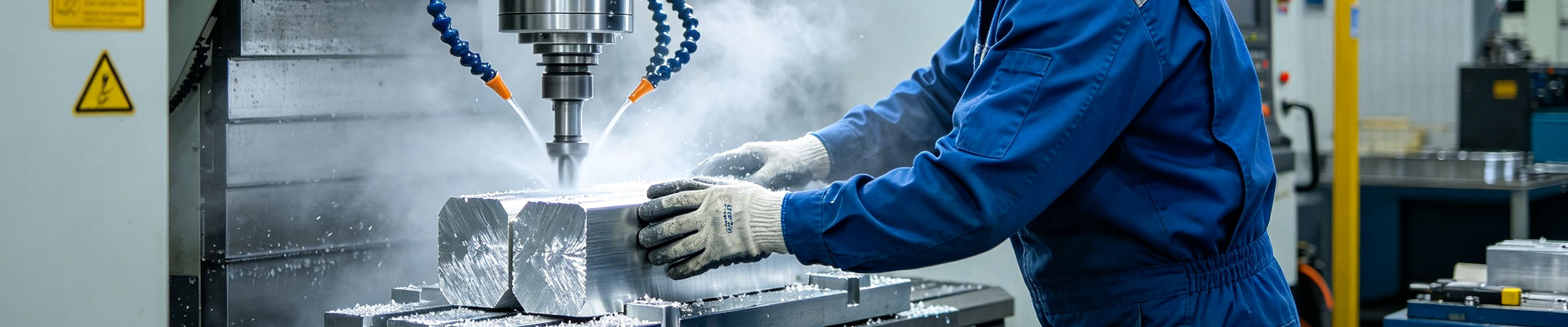
Multi-cavity tooling looks like simple multiplication. It is actually a decision about filling balance, thermal control, scrap amplification and how quickly a die can be changed.
The discussion around a possible high-volume humanoid robot line put a familiar choice back in focus: dozens of medium presses with two to eight cavity dies, or a few very large presses with twenty to forty cavity dies. The cavity count is often presented as arithmetic — forty cavities, forty times the output. It is not arithmetic. It is a process decision that decides yield, cycle time and how much a programme can change without starting over.
What cavity count actually changes
Adding cavities changes the runner and gate layout, the filling balance between cavities, the thermal load on the die, the ejection and spray sequence, and the clamping force needed. It also changes how tooling cost is divided per part. With a stable part at very high volume, a forty-cavity die on a large press can win on cost per piece. With a part that is still moving, the same die is a liability.
Filling balance is the starting point: all cavities must see metal at the same temperature and pressure. The gating and ingate velocity questions scale up with cavity count rather than disappearing. Thermal balance is the second: a die with forty cavities has forty local hot and cold zones, and a single overcooled cavity will set the pace for the whole shot.
Forty cavities are not forty good parts
Here is a simplified illustration, not a production formula. If each cavity had a 98% chance of producing a good part, the chance that all forty cavities are good in the same shot is about 45%. The real number depends on correlation — a bad shot usually affects several cavities at once — but the direction is the point: scrap is amplified by cavity count, and a multi-cavity die can turn a small process drift into a large quantity of rejected parts in minutes.
That is why a supplier's cavity count should never be quoted without its stable production yield. A line running 2-cavity tools at 96% yield can be more productive than a 20-cavity tool that needs constant adjustment. The arithmetic in the brochure assumes every cavity behaves.
When few cavities win
Low to medium volumes, frequent design changes, several similar parts sharing a press, and early programme stages all favour two to eight cavities. A smaller die is cheaper to alter, faster to prove out, and easier to isolate when one feature misbehaves. The flexible route described in the robot discussion is not a conservative fallback; it is the right answer while the part is still being frozen.
It is also the right answer when the surface treatment or machining step is the real bottleneck. Extra casting capacity that waits for a coating line does not improve delivery — the constraint we described in the micro-arc oxidation capacity article.
When many cavities win
A single stable part, millions of pieces a year, expensive press time and limited floor area change the conclusion. Twenty to forty cavities spread machine and tooling cost over far more pieces, and fewer press positions mean fewer operators and less handling. The condition is stability: the part geometry, the alloy, the process window and the downstream capacity all have to hold.
Die life matters differently here. With one cavity out of specification, a multi-cavity die may need the whole insert set pulled, so the die-life number has to be read together with the maintenance plan. Thermal management becomes a thermal balance problem across the whole die, not a setting on one controller.
How to validate balance before cutting steel
Before a multi-cavity die is approved, balance should be argued on evidence. Filling simulation can rank gate layouts and show where the last metal to arrive will freeze, but simulation does not include the variation of a real shot. Trial tools with instrumented cavities, short-shot studies and sectioning of parts from every cavity are still the standard way to prove that forty positions behave alike.
Then measure capability by cavity. A single overall Cpk hides a cavity that drifts at the edge of tolerance; a per-cavity chart shows it immediately. A thermal camera on the die face is worth more than a single oil-temperature reading, for the reasons set out in our note on mould temperature and thermal balance. The goal is not a perfect simulation. It is a die whose worst cavity is still inside the process window.
Five questions before approving a multi-cavity die
Ask for dimension and capability data by cavity, not a single average. Ask how filling balance was validated and how it is monitored in production. Ask for a die temperature map across all cavities. Ask what happens to the rest of the shot when one cavity goes out of tolerance. And ask how inserts are replaced without taking the whole die out of the press.
A supplier who can answer these has built multi-cavity tools before. A supplier who can only quote the cavity count has done the multiplication.
Where to take the decision
We design and build tooling next to the die casting and machining lines in Ningbo, so cavity count, yield and downstream capacity are assessed together. Send the part and the annual volume and we will tell you which route is defensible.