
A "First" Tailgate Inner Panel, If You Read the Small Print
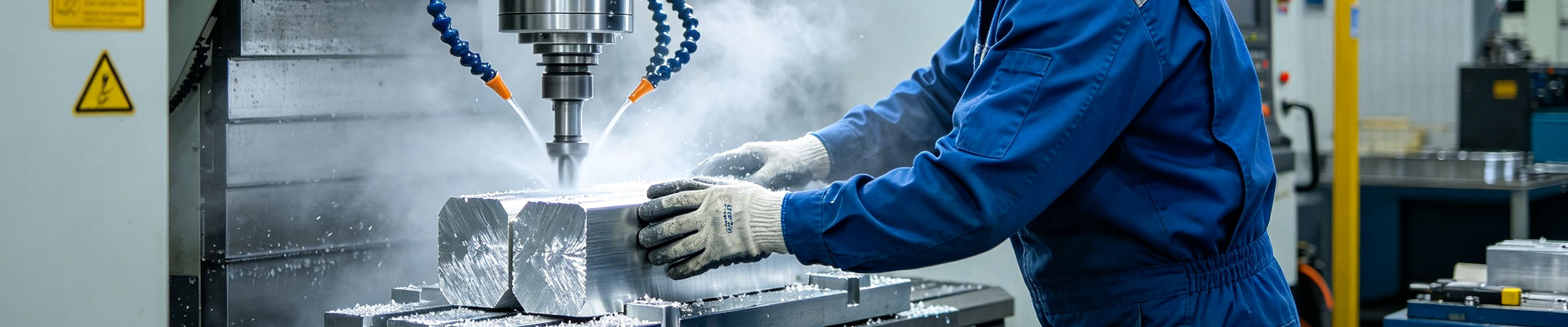
Haitian unveiled a 7.2 kg magnesium tailgate inner on 12 November. The claim was first for double-injection, not first for magnesium. That distinction tells a buyer more than the tonnage.
On 12 November 2026, Haitian Zhisheng Metal announced a magnesium alloy tailgate inner panel produced with Seres, Waffer Technology and Baowu Magnesium on an HMG7000U double-injection machine. The number that travelled with the story was 7.2 kg at an average wall thickness of 2 mm, nearly 50% lighter than a steel tailgate inner. Almost every retelling called it an industry first, and almost every one of them dropped the qualifying phrase: first large structural part made by magnesium double-injection moulding.
That is not a small edit. A magnesium tailgate inner panel is not new. A semi-solid magnesium tailgate or back-door inner had already been shown by other groups. What this announcement describes is a different way of filling the die: two injection units working on one large part, rather than a single injection path. The distinction is exactly the kind of thing that disappears in a headline and reappears in a supplier quotation.
What the trend list actually says
On 28 October 2026, at SAECCE 2026 in Suzhou, the China Society of Automotive Engineers published its ten technology trends for 2027. Trend five reads, in translation: magnesium alloy integrated forming of large body castings will achieve small-scale application. The supporting note is careful. It says 2026 saw series production of integrated magnesium housing-type parts, and that in 2027 the technology will enter small-batch use in rear floors, tailgate inners and similar large structural parts, with FAW, Changan and BYD among the names attached.
The same trend note puts numbers on the claim: roughly 20% weight reduction and more than 15% manufacturing cost optimisation, on the condition that the supporting system is in place. It then lists what that system is — very large die casting equipment, semi-solid die casting or injection, heat-treatment-free high-strength magnesium alloys, large die design and vacuum die casting control, magnesium-to-steel and magnesium-to-aluminium joining, and non-destructive testing.
Read honestly, that list is a checklist, not a celebration. The 20% figure belongs to a part with all those pieces working together, not to a metal substitution on an existing drawing.
The machine matters, but it is not the program
Haitian press is a 7,000-tonne double-injection thixomoulding machine with a clamping force of 70,000 kN, two 180 mm screws and a shot weight above 38 kg. It was first shown at China Die Casting in July 2025, with production readiness planned for later that year; first pictures of the press appeared in October 2026; Waffer completed machine testing at its Maanshan plant at the end of September 2026. Haitian also lists the cross-car beam, C-D pillar, door inners and rear underbody as intended parts for the same press.
Those dates matter. A machine tested in September and a part trial-produced in November are not the same maturity as a part in series production. The industry newsletter that covered the trial used the phrase trial-produced, and its account of the 13 May 2026 cross-car beam programme — a stated 1,000 units a day on a 3,600-tonne machine — is a different category of claim. One is a capability; the other is a rate.
Neither is diminished by the distinction. A buyer only gets into trouble when the two are read as one, because a quotation built on a trial part assumes a development budget that has not been agreed.
Why the tailgate inner is a hard part
Tailgate inners have a large projected area and a long flow path, and they are expected to hold stiffness and dimensional stability. These are precisely the conditions that expose a magnesium process: the metal freezes quickly, the flow front has to stay intact over a long distance, and the part has to remain measurable after trimming and machining. Shortening the flow path with two injection units addresses one of those problems directly. It does not address joining to the steel body, corrosion at the joint, or the inspection plan for a part this size.
The 2 mm average wall is worth sitting with as well. A thin wall is where a process proves itself, and it is also where the tooling assumptions in a quotation become fragile. We wrote separately about what a die-life figure does and does not tell you, and about what a trial yield proves about series production. This announcement sits in the same category: useful evidence about a process, not yet a statement about a rate.
The question to ask after the next "first"
Ask four things. Which part number is it, and what is the qualification status. Which process made it, and is that process what is already running in the supplier plant. Is the number a prototype, a small batch or a series rate. And which line in the trend checklist is still open — joining, coating, non-destructive testing, or dimensional control. A supplier who can answer those four has built this kind of part. A supplier who only has the tonnage has read the same press release.
We run tooling, die casting, precision machining and surface treatment in one plant in Ningbo, so a question about joining or inspection can be answered by the people who would do the work, not forwarded to someone else. Send the part and ask us the four questions; process scope here. For the difference between process routes on large parts, see our note on the November equipment list; for the temperature side of the same programme, the e-drive housing note.
One line
When a headline says first, read the noun that follows it. Double-injection, magnesium, tailgate inner and series production are four different claims.